Conservation Work
Protecting a Unique Ecosystem
Ngilai Community Wildlife Conservancy strives to protect this unique ecosystem through a combination of modern conservation science, traditional land stewardship, and community involvement and empowerment.
In the Laikipia-Samburu ecosystem, 98% of which lies outside of nationally-protected land, community conservancies are at the forefront of conservation.
"Significantly higher densities of elephants in the community conservancies than in the community pastoral areas indicate the success of this model of conservation: management of wildlife alongside communal grazing (…) The community land has the highest potential for elephant conservation."
— Ihwagi et al. 2015
Wildlife Monitoring & Protection
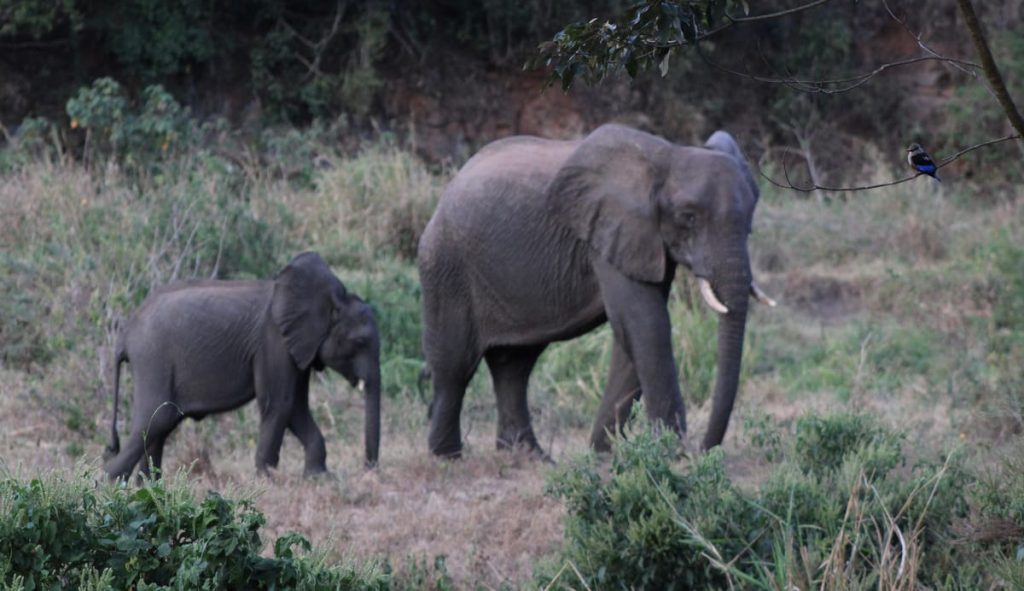
Ngilai’s rangers conduct daily patrols across the conservancy, monitoring wildlife populations, tracking elephant movements, and responding to human-wildlife conflict.
An ongoing elephant monitoring program tracks herd movements across the broader Mathews Range ecosystem. When conflict arises—crop-raiding, livestock predation, or dangerous encounters—the ranger team provides rapid emergency wildlife response.
The conservancy also maintains a livestock compensation fund to support community members affected by wildlife conflict, reducing retaliatory actions and strengthening coexistence between people and wildlife.
Grassland Restoration
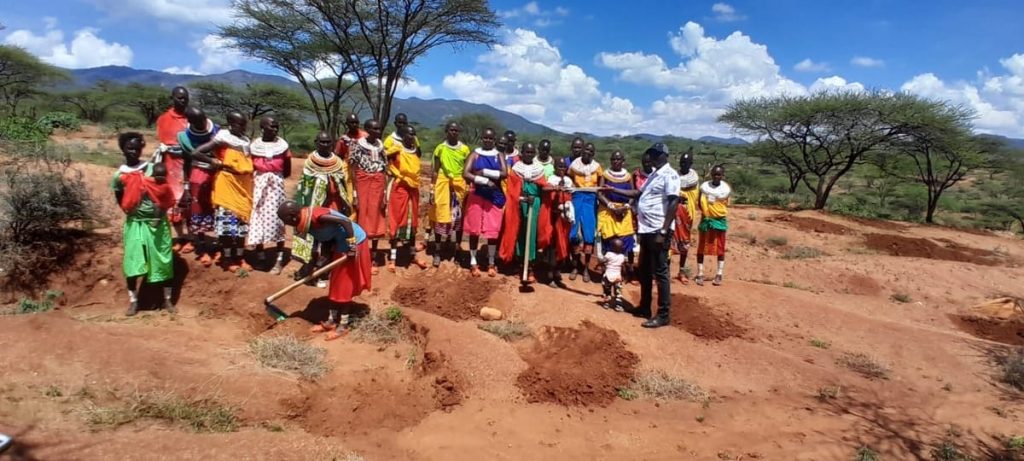
Since 2019, Ngilai has established 12 active restoration sites across the conservancy. This community-led program, driven primarily by local women, focuses on restoring degraded rangeland through a combination of traditional knowledge and modern restoration techniques.
The process begins with native grass seed harvesting from healthy areas of the conservancy. Seeds are then distributed across degraded plots prepared with semi-circular bunds—crescent-shaped earthworks that capture rainwater and reduce erosion. These bunds create micro-environments where grass seedlings can establish, even in Ngilai’s semi-arid conditions.
Restoration sites are fenced to exclude livestock during the critical early growth phase, allowing grasses to establish deep root systems before grazing is reintroduced through controlled rotation.
Sustainable Grazing
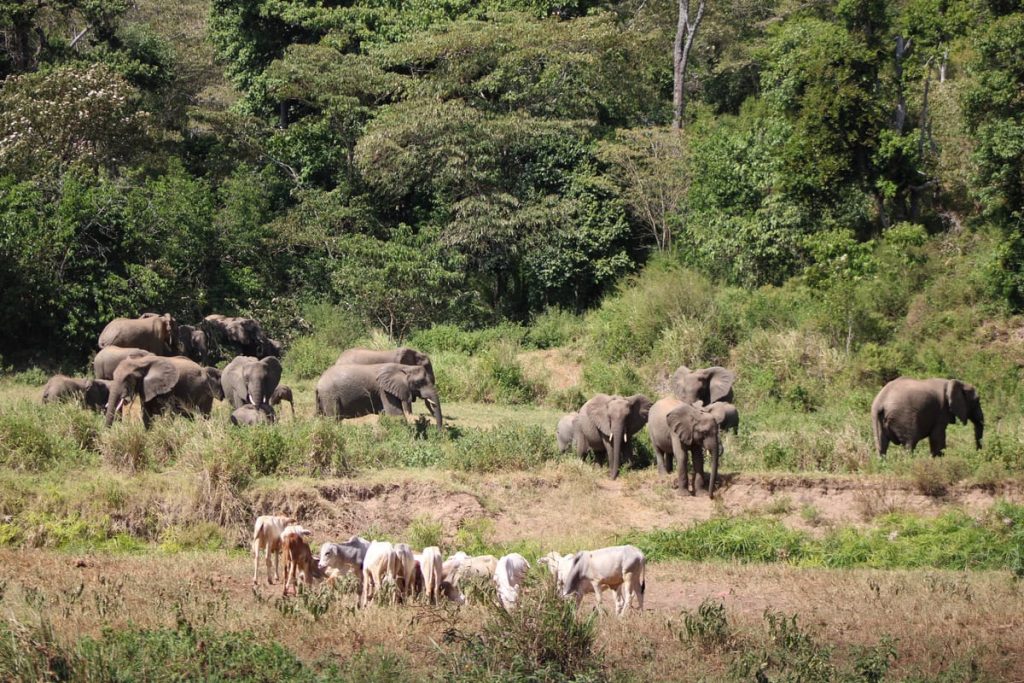
For the Samburu people of Ngilai, pastoralism is not just a livelihood—it is a way of life deeply connected to the land. The conservancy’s grazing committee works to balance the needs of livestock herds with the health of rangeland ecosystems.
Dry season grazing presents the greatest challenge, as herds concentrate around remaining water sources and forage. Through community education and outreach, the conservancy promotes sustainable grazing practices that maintain ground cover, protect water catchments, and allow vegetation to recover between grazing cycles.
Forest & Plant Conservation
The Mathews Range Forest harbours an extraordinary diversity of trees and shrubs, many of which hold ecological, cultural, and economic significance. Ngilai’s conservation programs focus particularly on two threatened species: the Kenyan Giant Cycad and the African Sandalwood.
Kenyan Giant Cycad
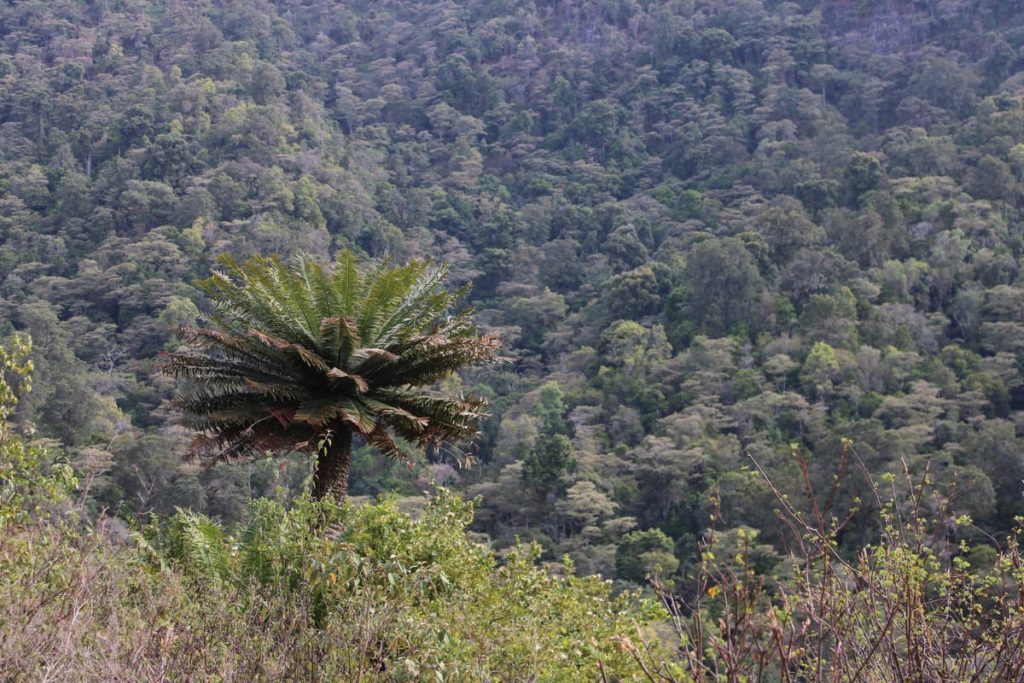
The Kenyan Giant Cycad (E. tegulaneus subsp. powysii) is one of the Mathews Range’s most remarkable inhabitants. Individual plants can live for over 600 years, making them some of the oldest living organisms in the region. The Mathews Range is home to an endemic subspecies found nowhere else on Earth.
These ancient plants face threats from habitat loss and illegal collection for the horticultural trade. Ngilai’s rangers monitor known cycad populations and work to protect their forest habitat from encroachment.
African Sandalwood
African Sandalwood (Osyris lanceolata) has been heavily exploited across East Africa for its aromatic heartwood, which is used in perfumery and traditional medicine. Within the Mathews Range, illegal harvesting has reduced populations significantly. Ngilai’s rangers patrol known sandalwood areas to prevent illegal logging, while community outreach programs raise awareness of the tree’s ecological importance and the long-term economic value of standing forests over short-term extraction.
Biodiversity
The Mathews Range is a biodiversity hotspot, home to a remarkable range of species across its varied habitats—from semi-arid lowlands to montane forest. The conservancy supports populations of elephant, buffalo, leopard, and a wealth of birdlife.
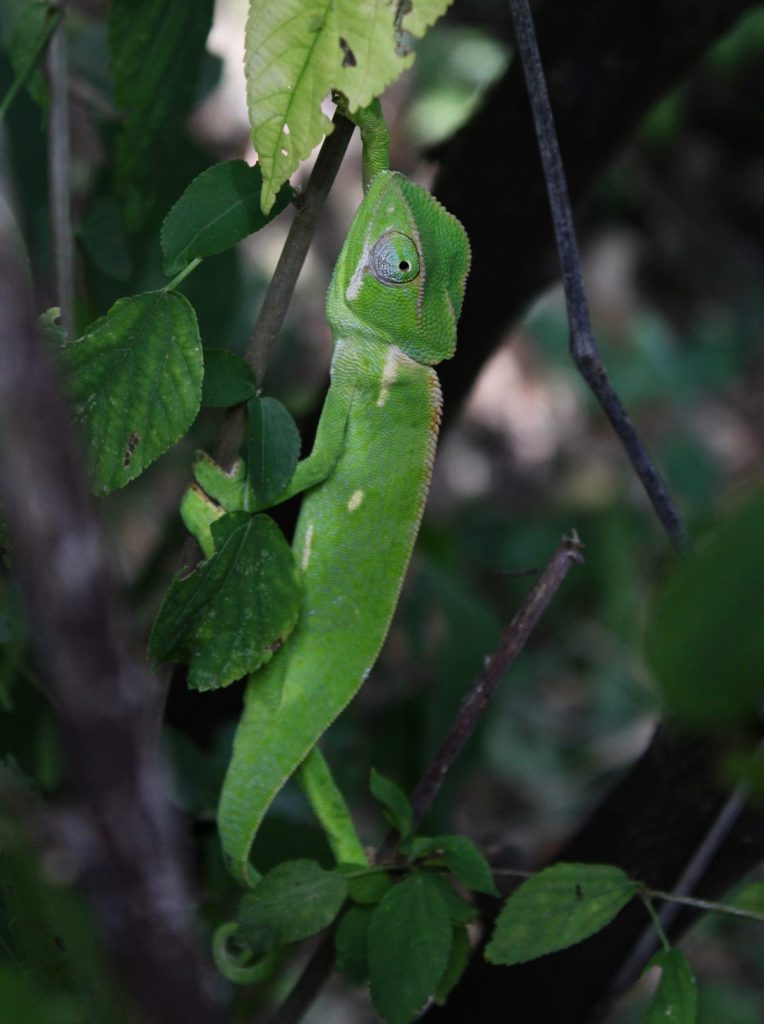
Among its more unusual residents is the flap-necked chameleon, a species that thrives in the transitional habitats between bush and forest. The Mathews Range is also home to endemic primates, details of which will be shared as research programs develop.
Support Conservation in the Mathews Range
Your support helps fund ranger patrols, restoration programs, and community livelihoods.